A Stadium Experience Rewritten
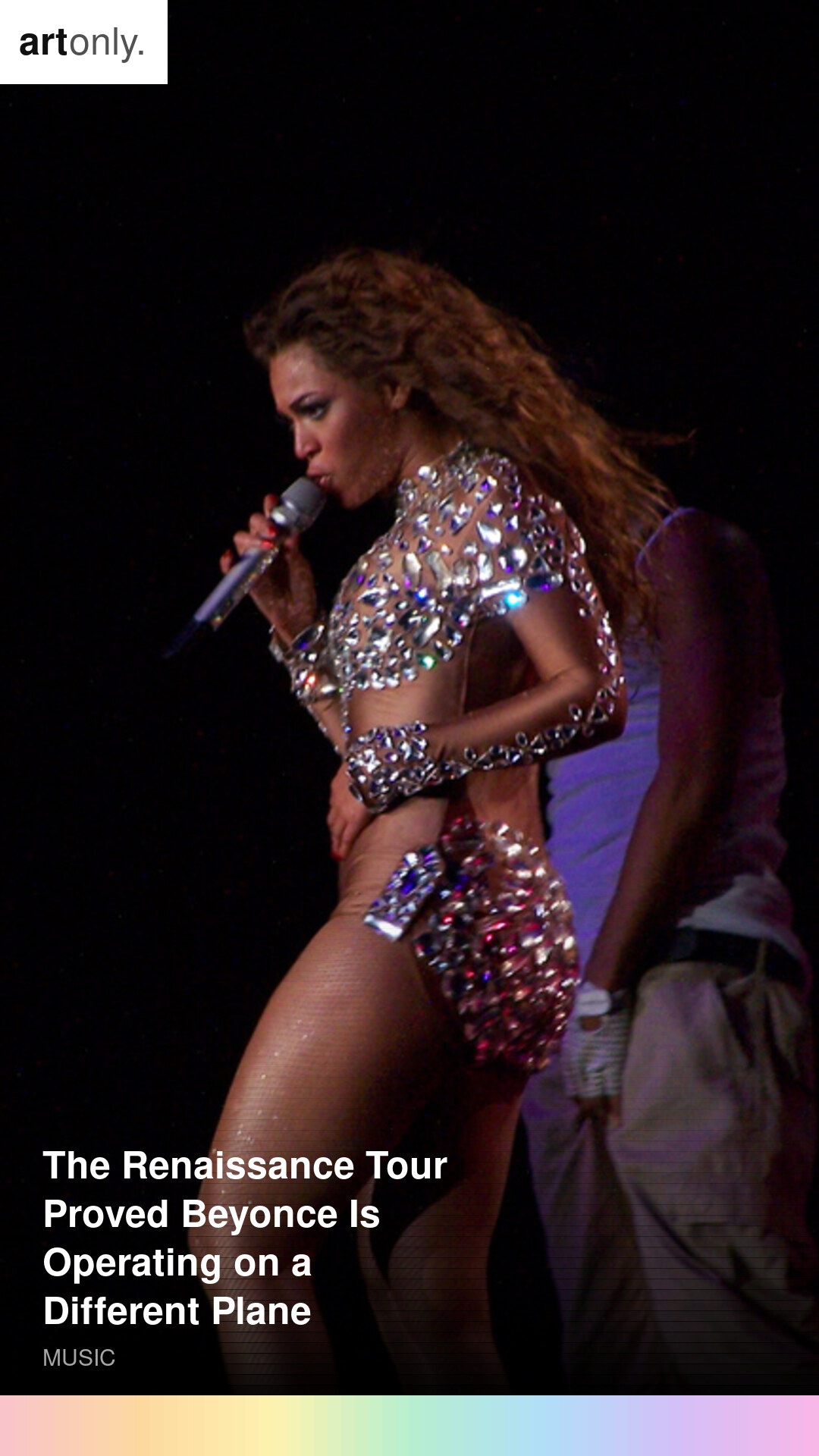
The Renaissance World Tour was not simply a concert tour. It was a full-scale reimagining of what a stadium show can accomplish when an artist operates with absolute creative authority. From May to October 2023, Beyonce delivered a production that treated every arena like a gallery installation, fusing choreography, fashion, lighting design, and live vocal performance into something that defied easy categorization.
More Than a Tour, a Cultural Reclamation
What made this tour significant was not just its scale but its intent. The Renaissance album had already staked its claim as a celebration of Black queer dance culture, and the live show doubled down on that thesis. Every costume change was deliberate. Every set piece referenced the lineage of house, ballroom, and disco. It was a history lesson delivered at 120 beats per minute, and audiences across six continents received it with an intensity that bordered on devotion.
The silver bodysuit moment alone generated more discourse than most artists produce in an entire career cycle. Fashion critics, music journalists, and cultural commentators all scrambled to articulate what they were seeing, and most settled on some variation of the same conclusion: nobody else is doing this.
The Economic and Cultural Footprint
The numbers told their own story. The tour grossed over $500 million, making it one of the highest-grossing concert tours in history. Cities reported measurable economic boosts when the show arrived. Hotels sold out. Restaurants near venues saw surges. The so-called Beyonce economy was not a joke but a documented phenomenon.
But reducing the Renaissance Tour to its financial impact misses the deeper point. This was an artist in her forties delivering career-peak performances night after night, in a cultural moment when the conversation around legacy artists often defaults to nostalgia. Beyonce refused that framing entirely. The tour was not a greatest hits victory lap. It was a forward-looking statement, built on a new album, presented with new visual language.
The Lasting Impression
The Renaissance Tour will be studied in music programs and cultural studies departments for years. It set a new benchmark for what audiences should expect from a headlining act, and it demonstrated that spectacle and substance are not opposing forces. When an artist commits fully to both, the result is something that transcends entertainment and enters the territory of genuine cultural contribution.
The House and Ballroom Lineage
The Renaissance album's debt to Black queer dance culture, house music, ballroom, voguing, was always overt, but the live show made it explicit in ways that the studio recording could not. The show incorporated elements that directly referenced the Harlem ballroom scene: the runway energy, the emphasis on categories and presentation, the theatrical performance modes that ballroom culture developed over decades.
This was historically significant. House music had been commercially strip-mined for decades by the mainstream entertainment industry, its roots credited and honored inconsistently at best. Beyonce's decision to put the lineage front and center at a global stadium tour, to name the culture rather than absorb it silently, was a meaningful act of historical acknowledgment coming from the biggest stage possible. The Black queer community that built the aesthetic language being celebrated was not peripheral to the tour. It was its stated center.
The Production Architecture
The scale of the Renaissance Tour's production was matched only by its specificity. Where most stadium shows achieve scale through sheer volume, more screens, more pyrotechnics, louder sound systems, the Renaissance production used scale to create intimacy at moments that should have felt impersonal. Camera work that cut to individual dancers. Lighting changes that made 60,000-seat arenas feel like they were lit for a hundred people. Choreography so precise that it rewarded watching at the screen resolution of a phone camera while still landing as a unified spectacle from the back row.
The team that built this, lighting designers, choreographers, costume designers, stage architects, operated at a level that had no real equivalent in contemporary live entertainment. The closest comparison is not another pop concert. It is a major theatrical production that happens to be performed in sports stadiums.
The 2023 Context
The Renaissance Tour arrived in a summer where the Eras Tour was simultaneously rewriting the commercial rules of live music. Two landmark tours running simultaneously created a moment of genuine collective investment in live performance that the industry had not seen since before the pandemic. The contrast between the two tours was as instructive as the comparison: where the Eras Tour was about the comprehensive history of a single artist's catalog, the Renaissance Tour was about a single conceptual statement executed at maximum intensity. Both approaches produced something extraordinary. Together they made 2023 one of the most significant years for live music in recent memory.
What Beyonce proved, above everything else, is that operating on a different creative plane is a choice you make with every decision, every costume, every lighting cue, every set list. The Renaissance Tour was that choice made visible at global scale.
The Choreography Standard
The dance direction of the Renaissance Tour was as technically demanding as the music itself. The show put forty to fifty dancers on stage in configurations that required absolute precision while maintaining the illusion of spontaneity. The opening sequence alone required weeks of rehearsal to make it look like something that emerged naturally.
This level of choreographic ambition is rare in popular music. Most stadium shows use dancers as visual backdrop, there but not central. The Renaissance Tour made the choreography structural. You could not remove it without the show collapsing. The dancers were not supporting Beyonce's performance. They were co-creating it, and the visual complexity that resulted was part of what made the show feel like more than a concert.
The artistic pedigree of the people she assembled for this work reflected the seriousness with which she approached it. Everyone on that stage was accomplished in their own right. The sum of their contributions was something that could not have been produced by any single vision alone, which is one of the things Beyonce has consistently understood about how to build something genuinely large: it requires knowing when your vision needs other people's excellence to reach its fullest expression.